
SF PUC Social Impact Partnership
The water that comes out of a faucet in San Francisco starts here, in the Tuolumne River watershed, and travels roughly 160 miles west through a system of dams, tunnels, powerhouses, and pipelines that San Francisco Public Utilities Commission has operated for more than a century. O’Shaughnessy Dam, Cherry Lake, Early Intake, Moccasin are San Francisco facilities sitting on Tuolumne County, staffed in part by people who live, shop and send their kids to school here in Tuolumne County.
When San Francisco spends money maintaining that system, a fair question follows. How does the outflow of water from Tuolumne County benefit us?
The Social Impact Program is one answer, and Sonora Area Foundation is the local piece of how it works.
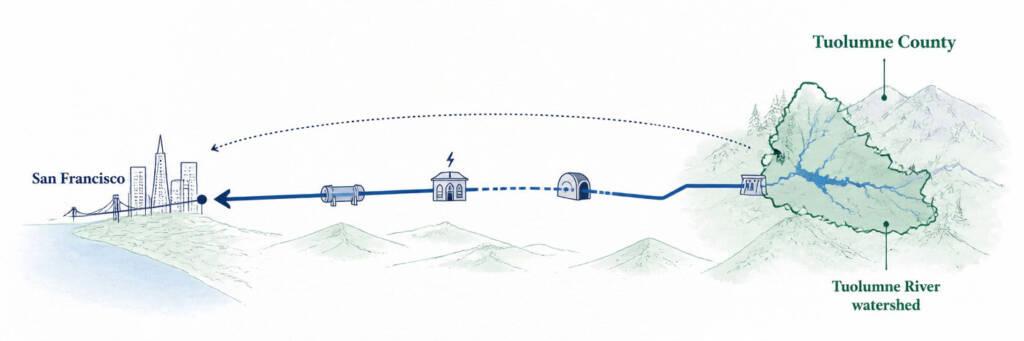
What is the Social Impact Partnership Program (SIP)?
San Francisco Water Power Sewer runs large capital projects, everything from pipeline replacement to dam and powerhouse upgrades. Those projects go out to bid, and contractors compete for the work.
Under the SIP, the utility asks bidders to do something beyond the construction itself. Firms competing for certain contracts voluntarily commit to community benefits through SIP Commitments in the places where the work happens, and those commitments become part of what the utility evaluates and tracks. Think workforce and training investments, support for local nonprofits, education and youth programs, and contributions that address needs identified by the host community.
Construction in a rural county brings trucks, crews, road impacts, and years of activity. The program is designed so measurable value stays behind after the equipment leaves.
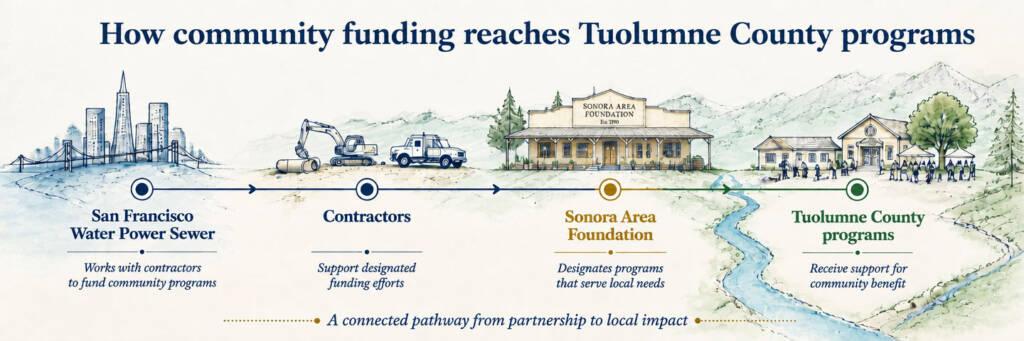
Here is the practical problem the partnership solves. A contractor based hundreds of miles away, or a utility headquartered in a city of nearly 800,000 people, has no reliable way to know which Tuolumne County nonprofit is doing solid work, which need is urgent this year, or which small organization can absorb a grant and put it to use without collapsing under the paperwork.
Sonora Area Foundation does know. SAF has been making grants in Tuolumne County since 1989, and it holds the local knowledge, relationships, and grant making infrastructure that make community dollars land well.
In the partnership, the Foundation serves as the local grant making partner. That role generally includes:
- Local intake: Accepting and reviewing applications from Tuolumne County nonprofits and community organizations.
- Community judgment: Bringing local staff and volunteer reviewers who understand which needs are real and which organizations can deliver.
- Fund administration: Handling the accounting, disbursement, and documentation so contributed funds move cleanly and are tracked.
- Reporting back: Collecting information on what grantees did with the money so the utility, the contractors, and the public can see results.
The division of labor matters, so it is worth being clear about it. San Francisco Water Power Sewer sets the program requirements and holds contractors accountable to their SIP Commitments. Contractors provide financial donations and/or volunteer support they promised to the four SIP Program Areas they identify: Job Training and Internships; Public Education; Small Business; Environment and Community Health. Sonora Area Foundation decides how eligible local dollars get distributed within the program’s parameters and gets them to organizations serving county residents. The Foundation does not set the utility’s construction schedule, negotiate contracts, or control how large any contribution will be.
What this means for people who live here
The benefit reaches residents indirectly, through the organizations they already use. Grant dollars flowing through this kind of partnership typically support nonprofits working on food access, youth programs, scholarships, health and behavioral health services, senior support, arts and cultural programming, emergency preparedness, and workforce training.
Real improvements:
- Programs that keep running: A small nonprofit with two staff and a long wait list can add capacity instead of turning families away.
- Local jobs and training: Workforce commitments create openings for county residents to train for and hold construction and trades work on projects in their own backyard.
- Money that stays local: Funds distributed through the Foundation go to organizations serving Tuolumne County, so the spending circulates through local payrolls and local vendors.
- A voice in priorities: Because a local foundation reviews the applications, the needs that get funded come from people who live with those needs.
There is also a trust benefit that is harder to put a number on. Hosting San Francisco’s water infrastructure has been a fact of life here for generations. This structured program with a local partner gives residents a visible, documented way that the relationship is mutually beneficial.
Local Programs supported include:
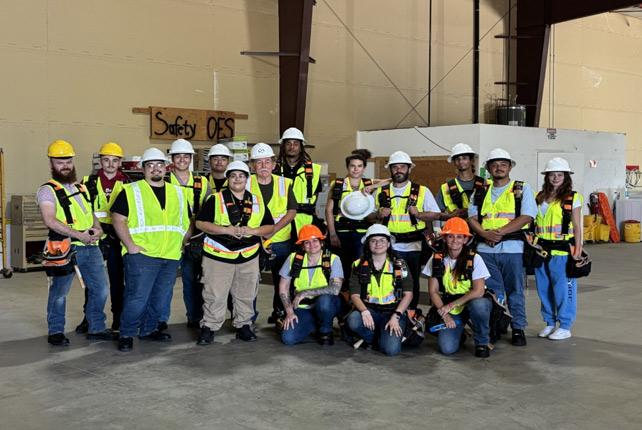
- Tuolumne Collaborative Construction Pre-Apprenticeship Program
- STEM Education Initiatives
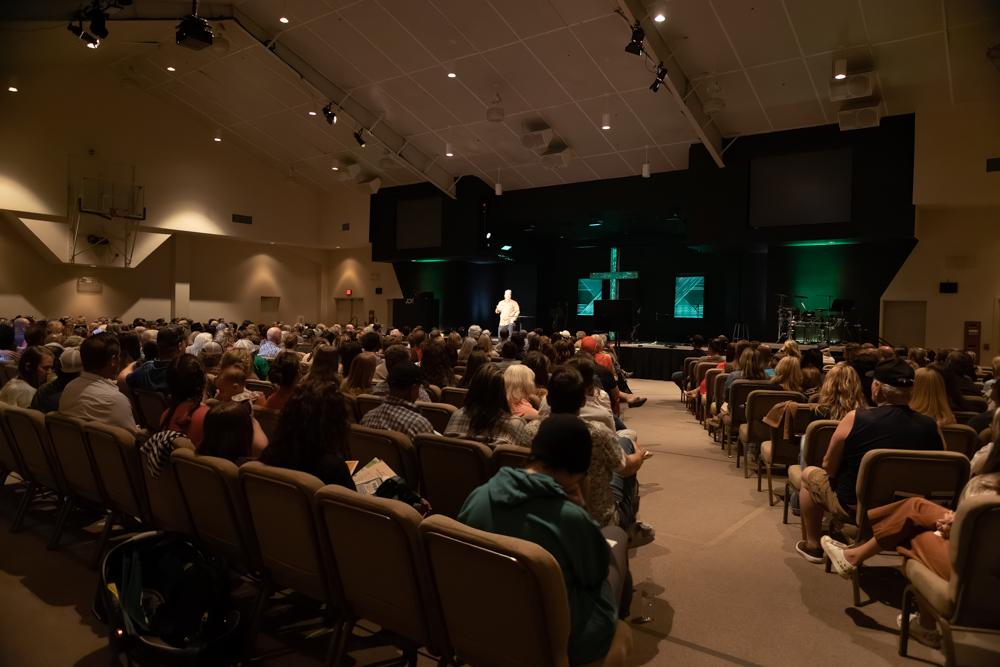
- Not My Kid Youth Mental Health Education
- Amador Tuolumne Community Action Agency (ATCAA Food Bank)
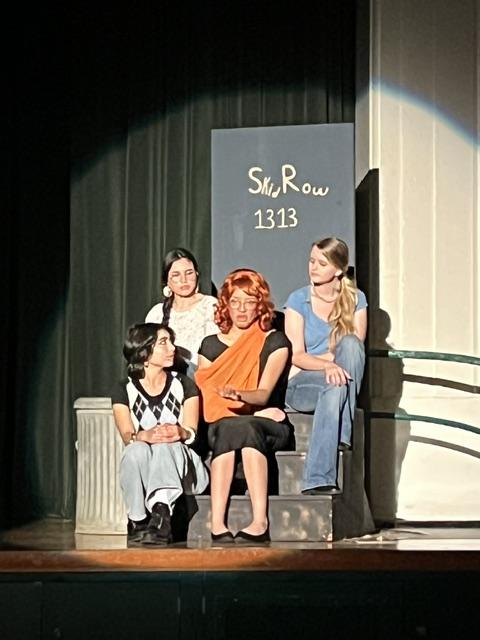
- Sonora High School Auditorium Lighting Upgrade
- Career Technical Education Program
- Resiliency Village Project
- Sierra ForestWorks



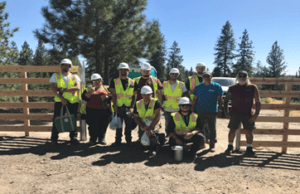
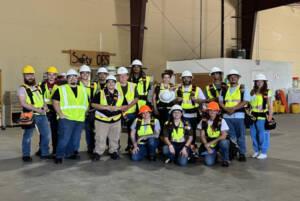


Participating Contractors